Snowberry Hat: A Guide to Mastering Kalurah Hudson's Winter Classic
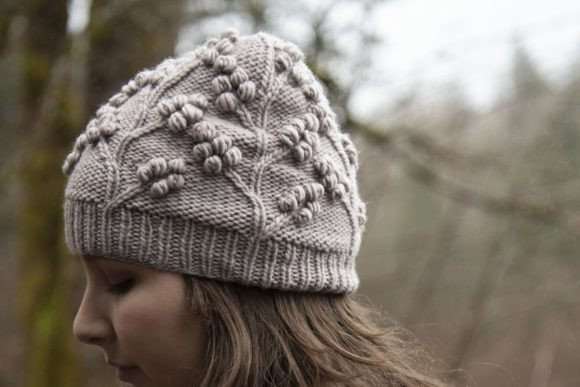
The Snowberry Hat stands out in the world of hand-knitted accessories not because it is overly complex, but because it captures a specific moment in nature with deceptive simplicity. Designed by Kalurah Hudson, this pattern draws its inspiration from the frozen berry bushes that dot the snowy landscapes of the Blue Mountains in Washington and Oregon. For knitters looking to move beyond basic stockinette caps without getting bogged down in intricate lace or massive cable charts, the Snowberry Hat offers a perfect middle ground. It features 2-stitch cables that mimic winding branches against a reverse stockinette background, punctuated by playful bobbles that break up the texture. However, even "easy" patterns can yield disappointing results if approached with the wrong materials or mindset. Understanding the nuances of this design before you cast on is the difference between a hat that fits beautifully and one that feels stiff or ill-proportioned.
Understanding the Design and Construction
Before diving into the yarn selection, it is crucial to appreciate how the Snowberry Hat is constructed. The pattern is worked in the round from the brim up, utilizing a 1×1 rib for the base. This choice is intentional; the 1×1 rib creates a wonderfully stretchy brim designed to accommodate a wide range of head sizes, making it an excellent project for gifting. The body of the hat relies on a contrast between the cabled branches and the bobbles set against a reverse stockinette background. This construction method means the fabric has a distinct texture that behaves differently than a standard stockinette cap.
Many knitters assume that because the cables are only two stitches wide, the tension requirements are loose. This is a common misunderstanding. In reality, the interaction between the tight cables, the raised bobbles, and the recessed reverse stockinette requires consistent tension to look balanced. If the reverse stockinette sections are too loose, the cables will pucker and distort the shape of the hat. Conversely, if the cables are pulled too tight, the brim may not lay flat, causing the hat to curl inward uncomfortably. The pattern, featured in Hudson's 2022 publication Cozy Cables, includes both charted and written instructions to help navigate these textures, but reading ahead about gauge is essential.
Common Mistakes in Yarn and Needle Selection
One of the most frequent errors knitters make when starting the Snowberry Hat is ignoring the specific fiber content recommended. The pattern calls for a worsted weight yarn, specifically Malabrigo Worsted, which is 100% Merino wool. While the pattern notes that any worsted weight yarn can be used, substituting the fiber type can drastically alter the final result. Merino wool possesses natural elasticity and memory, allowing the 1×1 rib to stretch over the head and snap back into place. If you substitute a non-elastic acrylic or a cotton blend, the brim may lose its structural integrity, resulting in a hat that slides off or fails to hug the ears properly.
Another overlooked detail involves needle size. The pattern suggests US 8 needles for the body. Knitters often feel tempted to go up a size to create a looser, airier fabric, especially when working with textured stitches like bobbles. However, increasing the needle size here can cause the 2-stitch cables to lose their definition, making them look like simple twists rather than distinct branches. Similarly, going down a size to tighten the fabric can make the bobbles difficult to form and the reverse stockinette sections too dense, reducing the overall drape of the hat. Sticking to the recommended US 8 needles ensures the gauge remains close to the finished measurements of 17 inches (43 cm) in circumference and 9 inches (23 cm) in height.
Evaluating Skill Level and Pattern Complexity
The Snowberry Hat is classified as an Intermediate skill level project. This designation is accurate, yet it often leads to two extremes: beginners attempting it without mastering the basics, and experienced knitters underestimating the attention required. For those new to cables, the 2-stitch cross is indeed the easiest cable there is. However, the challenge lies in managing the bobble formation alongside the cable crossings while maintaining even tension across the reverse stockinette background. If you have never worked with bobbles, the sudden increase in stitch count and subsequent decrease can throw off your row counting, leading to a misaligned pattern repeat.
A practical approach for those feeling unsure is to practice the bobble and cable sequence on a small swatch before casting on for the full hat. This allows you to see how the textures interact and adjust your tension accordingly. Furthermore, because the pattern is charted, knitters who struggle with visualizing written instructions should rely heavily on the chart. The chart provides a clear roadmap of where the bobbles appear relative to the cables, preventing the monotony that can sometimes lead to mistakes in long rows of repetitive knitting. Do not skip the blocking step either; blocking the finished hat to the specified 17-inch circumference is vital for opening up the texture and ensuring the cables stand out as intended.
Strategic Planning for Materials and Cost
When planning your purchase, consider the yardage carefully. The pattern requires approximately 160 yards (146 m), which typically fits within a single 100g skein of Malabrigo Worsted, such as the beautiful Pearl colorway shown in the original photos. However, yarn dye lots can vary significantly. A mistake many knitters make is buying two different skeins of the same colorway thinking they are identical. Even slight variations in shade can become glaringly obvious in a textured pattern like the Snowberry Hat, where light hits the cables and bobbles differently. Always ensure you buy all your yarn from the same dye lot to maintain color consistency.
If you decide to use a different brand of worsted weight yarn, check the yardage per skein meticulously. Some worsted weights are spun thinner and offer less yardage, meaning you might run short near the crown. Running out of yarn mid-project forces a messy join that disrupts the flow of the cabled branches. A better approach is to calculate the total yardage needed based on your personal gauge and add a safety margin of 10–15%. This small investment in extra yarn prevents the frustration of a halted project and ensures you have enough to complete the crown decreases smoothly.
Maximizing Satisfaction with the Final Product
The true value of the Snowberry Hat lies in its ability to combine technical interest with wearable comfort. By avoiding the pitfalls of incorrect yarn substitution, ignoring gauge, or rushing through the bobble instructions, you ensure a high-quality finish. Remember that the reverse stockinette background is not just filler; it is the canvas that makes the cabled branches pop. Treat every section with equal care. When you follow the designer's intent regarding materials and construction, the result is a versatile, one-size-fits-most hat that captures the quiet beauty of winter landscapes.
Whether you are a hobbyist looking to expand your repertoire or a creator seeking a reliable pattern for a small business, the Snowberry Hat offers a rewarding experience. It teaches valuable lessons about tension management and texture interplay without overwhelming the knitter. By taking the time to prepare correctly—selecting the right wool, checking your gauge, and understanding the pattern structure—you transform a simple knit into a cherished accessory that truly reflects the spirit of the Blue Mountains.